


How We Approach Brand Identity for FMCG Brands
- Suramya Design
- Jan 26
- 4 min read

In FMCG, brand identity is not decoration. It is a growth system. It decides whether your product gets picked up, remembered, trusted, and repurchased. For founders building FMCG brands in categories like food, personal care, wellness, health, or lifestyle, brand identity often becomes the silent difference between a product that sells occasionally and a brand that scales consistently.
At Suramya Brand Design Studio, we approach FMCG brand identity as a business-critical asset, not a design exercise. Our work begins with understanding how consumers behave under pressure limited time, too many options, and low emotional investment per purchase. In such environments, your brand identity must communicate value instantly and repeatedly.
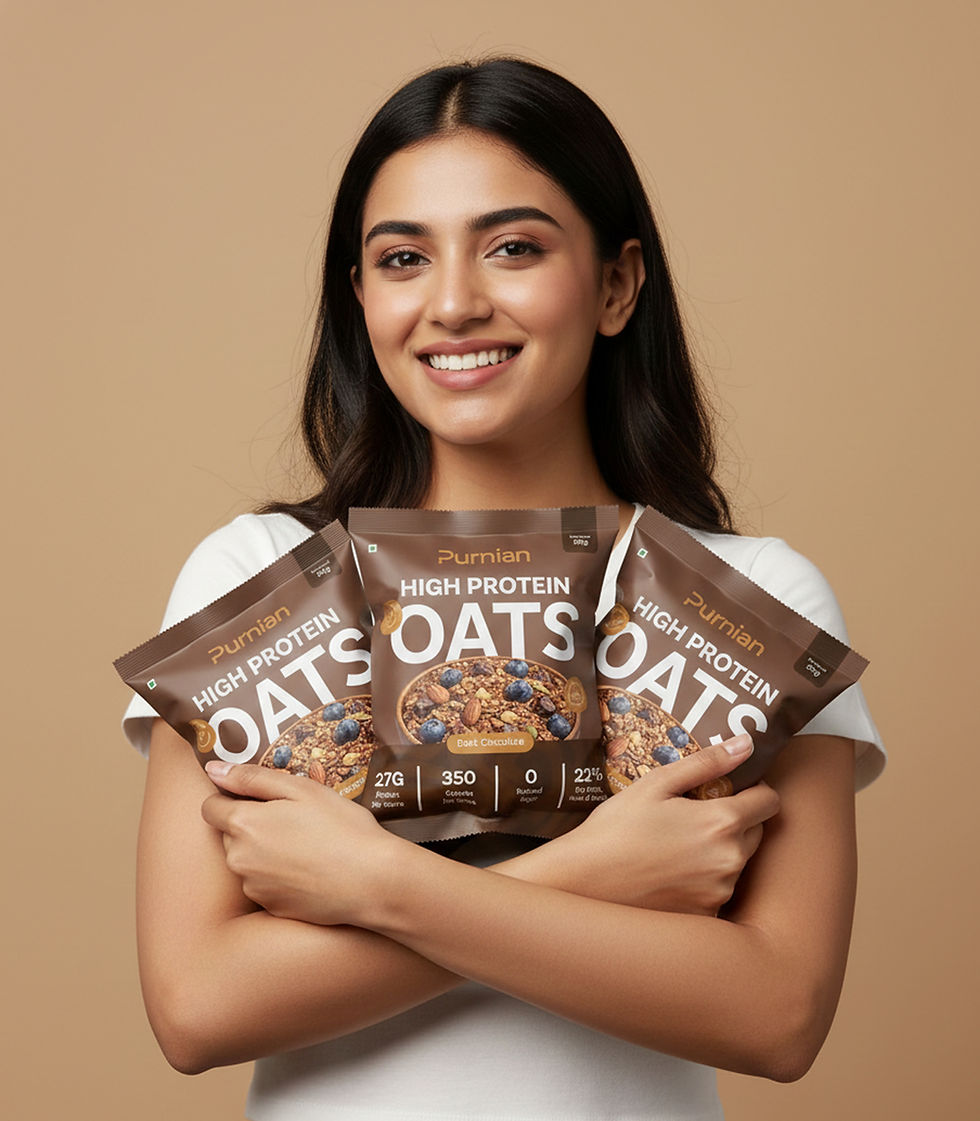
FMCG Branding Starts with Category Reality, Not Aesthetics
Every FMCG category has its own visual language. What works for a wellness brand will fail for an indulgent food product. What builds trust in a health-focused FMCG brand may look boring in lifestyle or personal care.
We begin by mapping category saturation, shelf behavior, and digital discovery patterns. FMCG buyers don’t study brands they skim them. This is why clarity always beats creativity in this space. Founders often want something “different,” but in FMCG, being different without being understood is a fast way to lose money.
A packaged food brand we worked with was visually attractive but invisible on shelves. The identity lacked hierarchy no clear brand cue, no instant category recognition. By restructuring the visual identity to align with how consumers scan shelves, the brand started performing better without changing the product itself. This is the power of identity-led thinking in FMCG.
Brand Identity Must Be Built for Speed and Scale
Unlike tech or service brands, FMCG brands don’t get the luxury of long storytelling. Your brand identity must work in under three seconds on packaging, marketplaces, ads, and retail environments.
This is where many early-stage FMCG startups struggle. They design for one SKU, one channel, or one campaign. But FMCG growth demands expansion new products, new formats, new regions.
We design brand identity systems that are modular, not rigid. This allows brands to introduce new SKUs without confusing consumers. A lifestyle FMCG brand we partnered with initially launched with one hero product. When expansion began, the original branding started breaking. We rebuilt the identity to support scale while maintaining recognition, helping the brand grow across digital and offline channels without dilution.
Consumer Psychology Drives Every Identity Decision
In FMCG, colors, typography, and layout are strategic tools not stylistic preferences. A wellness or health-focused brand requires trust cues, while an FMCG snack brand relies on appetite appeal and visual energy. Typography must be legible from a distance. Packaging must communicate price positioning without words.
A wellness FMCG brand struggled to convert despite strong influencer campaigns. The identity looked premium but lacked warmth and credibility for first-time buyers. After refining the brand identity to balance authority with approachability, the brand saw improved engagement and repeat purchases. The messaging didn’t change the perception did.
This is why FMCG brand identity must be rooted in how consumers feel, not how founders want to be seen.
Designing FMCG Brands for Market Expansion
Many founders think about branding only for their current market. But FMCG brands often aim to expand whether across cities, retail formats, or international markets. A brand identity that works locally may fail globally if it lacks adaptability.
When FMCG brands prepare for larger markets or global exposure, identity clarity becomes non-negotiable. Clean systems, strong brand marks, and culturally neutral design cues help brands transition smoothly into new regions and platforms without losing trust.
Our role is to future-proof FMCG brand identity so it supports growth, not restrict it.
Why Most FMCG Branding Fails
FMCG branding fails when it is rushed, trend-driven, or disconnected from consumer reality. Founders invest heavily in marketing but overlook the foundation. Without a strong brand identity, performance marketing becomes expensive and inefficient.
Strong FMCG brands are not loud they are consistent. They show up the same way everywhere, every time. That consistency builds trust faster than any campaign.
At Suramya Brand Design Studio, we help FMCG founders build brand identities that are clear, scalable, and commercially effective. Because in FMCG, branding is not about standing out once it’s about being chosen again and again.
Thinking about strengthening your FMCG brand identity?
If your FMCG brand is struggling with shelf visibility, inconsistent packaging, or difficulty scaling across new products, our Brand Identity & Strategy service helps founders build brands that are clear, scalable, and commercially effective.
You may also want to explore how packaging decisions influence consumer trust and buying behaviour in FMCG markets especially as brands expand and compete for attention.
FAQs: FMCG Brand Identity & Strategy
What is FMCG brand identity?
FMCG brand identity includes the visual and strategic elements that shape how consumers perceive, recognize, and trust a fast-moving consumer goods brand.
Why is brand identity critical for FMCG startups?
FMCG startups operate in crowded markets where purchase decisions are quick. A strong brand identity improves recall, trust, and repeat purchases.
How is FMCG branding different from other industries?
Unlike tech or services, FMCG branding must communicate value instantly and work across packaging, retail, and digital platforms simultaneously.
Can rebranding help an FMCG brand grow?
Yes, when rebranding is strategy-led. Aligning identity with consumer behavior and category expectations can significantly improve performance.
How long does it take to build a strong FMCG brand identity?
Design execution may take weeks, but building a strong FMCG brand identity is an ongoing process that evolves with market feedback and scale.
Should FMCG founders invest in branding early?
Absolutely. Early investment in brand identity reduces marketing waste and creates long-term consistency as the brand grows.


Comments